Who we are, and how we work
Craftosphere works with two kinds of companies: businesses that want the repetitive work off their people, and software companies that want their engineers' judgment to keep pace with AI.
What we believe
AI writes more of the code every month, and it does the typing faster than any team can judge the result. The people in the loop have to keep the judgment that makes the result trustworthy.
For businesses, that judgment shows up as a question: which of your work should run without manual labor, and how. Fixing the workflow you already have (whether it runs on a spreadsheet or on manual data entry), a custom system, AI where it's justified, or nothing. We find the work that's worth fixing, fix it with the tool that fits, and take the repetitive work off your people.
For software companies, the same judgment is engineering craft. Some teams thrive: engineers use AI to ship faster and get sharper, review gets more structural, and architecture more deliberate. Other teams struggle: review collapses into skim-and-approve, and the team's judgment quietly leaves. The difference is whether the team builds, measures and practices judgment on purpose. We measure it (the Engineering Quality Scorecard), practice it (the Judgment Dojo) and apply it (the Precision Sprint).
We aren't anti-AI. We use AI every day and we stand by it. We believe that the humans in the workflow must stay essential, making the decisions the models can't make, and that someone has to build the practice and the instruments that make sure they do.
Our name is craft plus stratosphere. Every company has a craft: the business it's good at, or the software it ships. We take that craft to the stratosphere, and help you stay there, with systems your company owns and practices your teams keep.
Why Craftosphere exists
Vision
We're working for a world where people can spend their time on what they're actually good at, because the chores that used to fill their days don't need manual labor anymore. Engineers make the decisions and the critical design, and AI writes code they trust because of those decisions.
Mission
We work with people whose craft is buried under chores nobody should do, or under code nobody can judge. We give them a way up and the tools to stay there. We're successful when they no longer need us.
Our principles
We hold every engagement to these. If we break one, hold us to it.
A price agreed before we start
Every engagement has a written scope and a price agreed in writing before the work starts. No retainers, no open-ended advisory. The price doesn't change unless you change the scope, and you approve every change before it costs anything.
Practitioners, not advisors
We don't stop at telling you what's broken and handing you a report (unless that's what you ask for). We work alongside your people: pairing, reviewing, building. The work happens in the code and on your data, not in a slide deck.
Evidence over intuition
Every claim is backed by data, measurable outcomes, or a working result you can see every week. The Scorecard produces CODA data. The Dojo produces before-and-after readings. A build produces working software on your data from the first week. If we can't demonstrate it, we don't promise it.
An honest no
If we aren't the right answer, we say so in the first conversation. Sometimes the right answer is a no-code tool, or leaving what you have alone, or a team that isn't ready for a product yet. You leave with that answer, and it costs you nothing.
Automation that frees people
We take the repetitive work off people so they can do the work they're good at. Automation that exists to make people unnecessary isn't our business. We automate to free people, not to replace them.
Both sides win
We're looking for a price that's fair to both of us, and an engagement that pays off for you. When it wouldn't pay off for you, we say so before you sign. We would rather lose a deal than win one that hurts you.

Attila Fejér
Founder & CEO
We don't fly people up only to show them the view. We also make them able to stay there.
- 2010
- Engineering since
- 2013
- Coaching since
- 400+
- Teams coached
I believe in craft over chores, so I give people a way up and the tools to stay there. I started programming at 12 because I loved making things. It's been my profession since 2010, and since 2013 I've also coached engineering teams, more than 400 so far. The largest was a program another firm ran for a Fortune 100 company, with 600+ teams. I coached 300+ of them as that firm's subcontractor. In the case study I write about what I learned there.
I still do both, because each makes the other stronger. Only someone who does engineering can teach it credibly, so I build systems for small companies. The quality bar comes from the coaching: every small system is built to the same standards I teach large engineering teams.
That's why I work with two kinds of companies at Craftosphere. For businesses, I judge which work is worth handing to a system, with what tool, and what to leave alone. For software companies, we have three products: the Engineering Quality Scorecard shows where a team's judgment is, the Judgment Dojo builds it every week, and the Precision Sprint applies it with the team to one bounded problem. All three are built from the coaching lessons, the jobs I held before, industry best practices, and my own mistakes.
Alongside the engagements, I'm developing CODA, which measures judgment alongside DORA and SPACE. It's not final yet. I refine it based on my engagements. I'm part of the team that builds nWave, the open-source AI-assisted development framework, and we use nWave in our engagements. I write Code That Makes Sense, a weekly newsletter for senior engineers about engineering judgment.
The engineers at Craftosphere are people I trust. I'm building the company I'd hire myself.
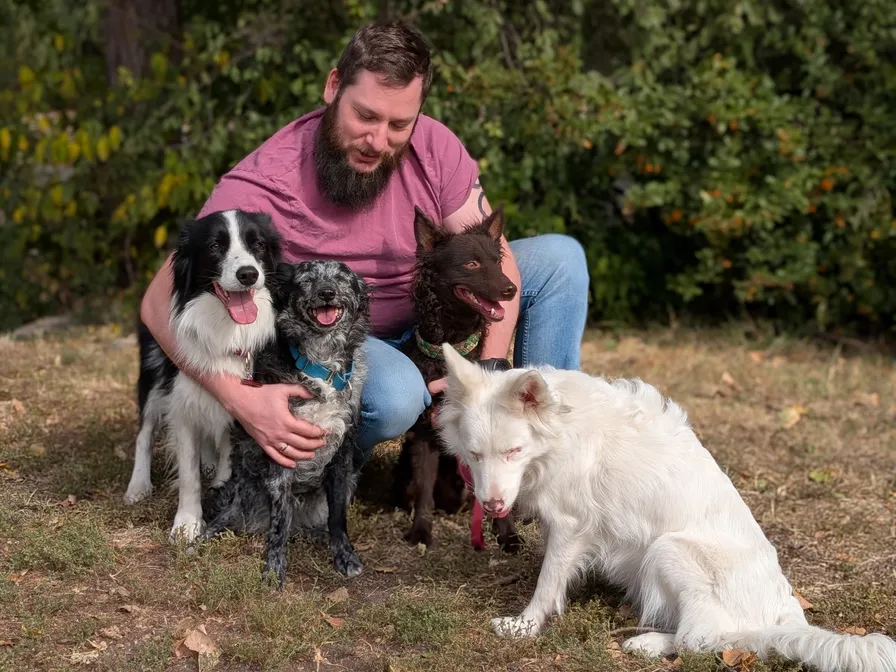
Outside of code, I'm a certified trek guide, I ride a motorbike, do DIY, play guitar, do traditional Ju-Jitsu, and have four dogs.
Bring what you have. We'll tell you whether it's worth fixing.
A short conversation about what you have today. You leave with a straight answer, even if the answer is "leave it as it is". No newsletter, no follow-up sequence.